
ARONARO SYSTEMS CAREER GUIDES
Start a Career in Passive Fire Protection.
Passive fire protection is one of the most important specialist trades in construction — and one that many people never hear about until they are already working in the industry.
This page brings together the practical resources created alongside How to Start a Career in Passive Fire Protection (UK), helping complete beginners understand the trade, prepare properly and approach their first opportunity with realistic expectations.
Career guidance for the UK passive fire protection sector.
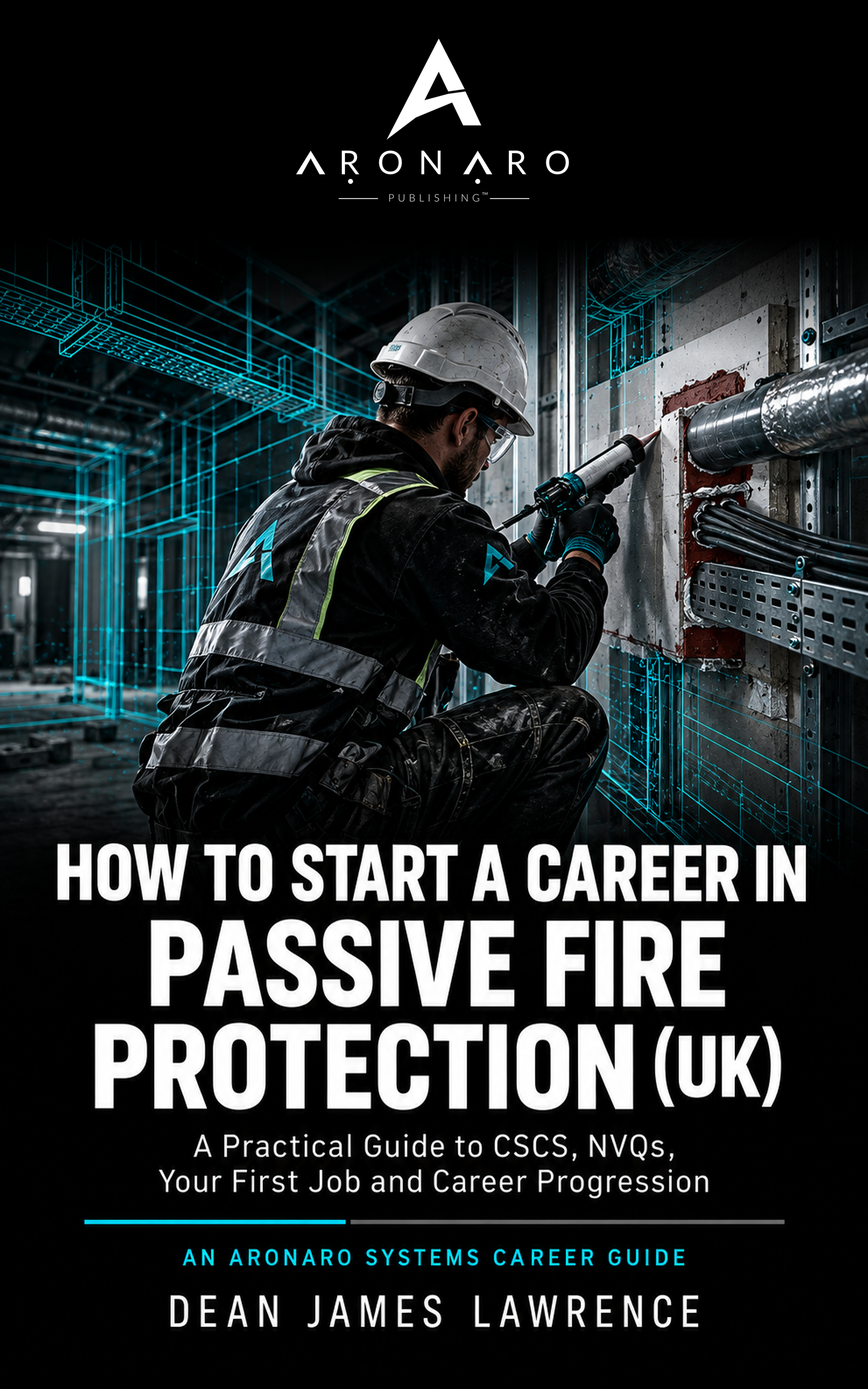
THE CAREER GUIDE
A Clearer Route Into a Trade Most People Never Hear About.
Getting into passive fire can feel circular.
Employers may ask for experience and qualifications, while the qualification itself depends on genuine workplace experience and evidence.
How to Start a Career in Passive Fire Protection (UK) was written to explain that route properly — without pretending there is a shortcut.
The guide covers:
what passive fire protection actually is
what the job is like in the real world
CSCS routes a newcomer needs to understand
how to approach employers
how the passive-fire NVQ works
tools, PPE and site readiness
documentation and quality control
employment and self-employment differences
realistic pay context
career progression
what to focus on during your first 90 days
a practical 14-day entry action plan
By Dean James Lawrence
More than 20 years in passive fire protection.
Paperback and Kindle publication in progress.
FREE COMPANION RESOURCES
Practical Tools to Help You Take the Next Step.
The book explains the route. These resources are designed to help you act on it.
Every download is free and has been developed to the same ARONARO Publishing standard as the paid guide — clear, practical and built to be used.
Passive Fire Trainee CV Template
Create a clear, honest trainee CV that makes it easy for an employer to understand where you are starting from, what you can already offer and what opportunity you are looking for.
Illustrated Starter Tool & PPE List
A visual guide to common PPE and basic tool categories a newcomer may come across — with an emphasis on asking the employer first and avoiding unnecessary spending before you have work.
Employer Outreach Templates
Practical email, phone, LinkedIn and follow-up wording for approaching passive-fire employers without pretending to have experience you do not yet have.
Interview Preparation Sheet
Prepare for trainee conversations, think through the questions you may be asked and record the questions you should ask an employer before accepting an opportunity.
Employer Contact Tracker
An editable employer-search system built around the 30-company method, with contact tracking, follow-up reminders, progress monitoring and a print-friendly working view.
WHO IT'S FOR
You Do Not Need to Already Be in the Trade.
This guide and the companion resources were designed for people at the beginning of the process.
School Leavers
For people considering their first practical career and looking beyond the trades they already know.
Career Changers
For adults looking for a specialist construction career with a route to recognised workplace competence.
Construction Workers
For labourers, improvers and other site workers interested in moving into a specialist passive-fire role.
Complete Beginners
For anyone trying to understand what the trade is, what employers expect and what steps are worth taking first.
NO SHORTCUTS
Preparation Helps. Competence Still Comes From Real Work.
Passive fire protection is a life-safety trade.
A book, downloadable resource or short course cannot make somebody occupationally competent on its own.
The purpose of these resources is to help you understand the industry, prepare more effectively, approach employers professionally and recognise the route towards genuine supervised workplace experience and qualification.
Requirements around CSCS cards, qualifications and training can change. Always check the latest information from the relevant official organisations before paying for training or making qualification decisions.
ABOUT THE AUTHOR
Dean James Lawrence
Dean has more than 20 years of experience in passive fire protection, beginning with hands-on installation work involving fire-stopping materials, compounds, boards and barrier systems before later working as a Contracts Manager.
He holds Level 2 and Level 3 vocational qualifications related to passive fire protection.
This guide was created from the perspective of somebody who has worked in the trade and understands how confusing the route can look from the outside.
The objective is straightforward: help newcomers understand what they are walking into, avoid unnecessary mistakes and approach their first opportunity properly.

START WITH THE NEXT STEP
Learn the Trade. Prepare Properly. Start the Conversation.
You do not need to know everything before approaching an employer.
You do need to understand what you are applying for, be honest about where you are starting and be prepared to learn properly once somebody gives you the opportunity.