
FOUNDER STORY
I Stopped Waiting for My Life to Come Back and Started Rebuilding It Instead.
For most of my life, I believed I could work through almost anything. More than twenty years in physically demanding roles had taught me to keep going, solve problems and rarely admit when something was wrong.
Then a serious knee injury disrupted my health, my work and the confidence I had always placed in my physical ability. What followed became the hardest period of my life—but also the beginning of a completely different future.
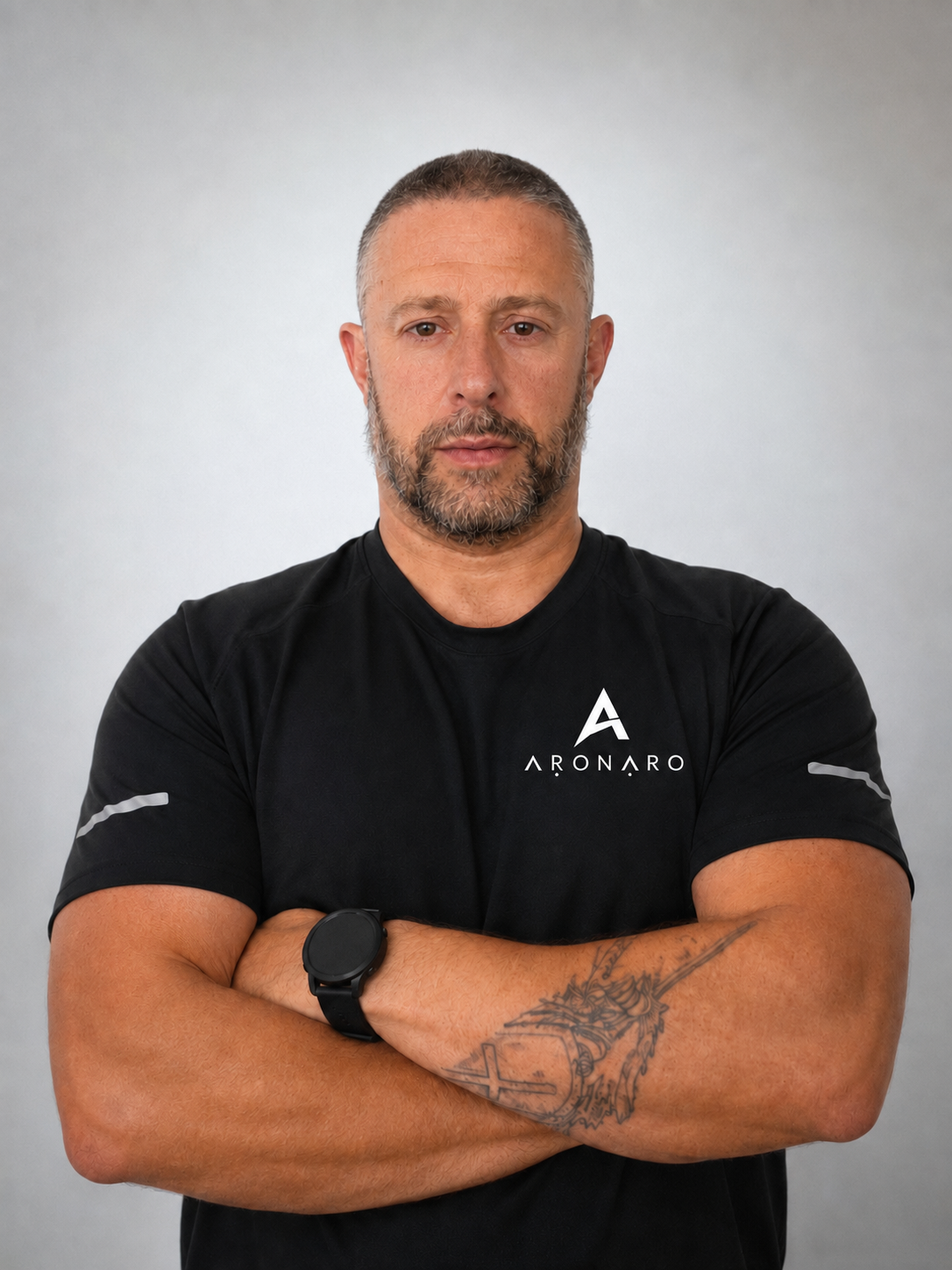
BEFORE THE INJURY
A Life Built Around Physical Work
For more than twenty years, my working life depended on strength, movement and the ability to keep going when the job became difficult.
I had spent more than two decades working in passive fire protection and construction environments where long days, heavy materials, ladders, stairs and physically demanding conditions were simply part of the job.
I took pride in being dependable. When something needed doing, I found a way to do it. Physical capability was not just connected to my work; it had become part of how I measured my independence, confidence and value.
Outside work, life was equally full. I had a family to support, responsibilities that could not be paused and plans for the future. I assumed my body would continue carrying me through all of it, because it always had.
I believed resilience meant continuing, regardless of what my body was telling me.
THE TURNING POINT
When Pain Stopped Being Something I Could Work Through
While working away in Glasgow, carrying materials and repeatedly using stairs, the pain in my knees escalated beyond the usual aches associated with physically demanding work. Swelling, stiffness and restricted movement followed, and tasks I had completed automatically for years became increasingly difficult.
At first, the problem was treated as bursitis, and I expected rest and time to put it right. Instead, the symptoms persisted. Walking, stairs, kneeling and standing after sitting became daily reminders that something had changed.
What unsettled me most was not the pain alone. It was the loss of certainty. I no longer knew what my knees would allow me to do, whether I could continue the career I had built my life around or how much independence I might lose.
THE IMMEDIATE IMPACT
01
Work
Tasks that had always felt automatic became slower, painful and uncertain.
02
Movement
Walking, stairs, kneeling and standing after sitting became daily obstacles.
03
Confidence
The future of my health, independence and career no longer felt secure.
THE LOWEST POINT
When the Physical Setback Became Something More
The loss of movement was difficult. The uncertainty surrounding work, independence and the future was harder.
As the pain and limitations continued, frustration gradually became a much deeper loss of confidence. I had always relied on my ability to work, provide and remain physically capable. Suddenly, each of those things felt uncertain.
Simple movements became reminders of what I could no longer do comfortably. I began measuring each day by pain, stiffness and swelling, while worrying about whether the career I had built over more than twenty years was still sustainable.
The injury affected more than my knees. It changed how I saw myself and made the future feel smaller. I was still carrying the same responsibilities, but no longer felt certain that my body could carry me through them.
I had spent years believing that resilience meant enduring more. Eventually, I realised that rebuilding would require a different kind of strength.
TAKING BACK CONTROL
The First Signs of Progress Changed Everything
I reached a point where waiting and hoping were no longer enough. I still needed medical support and proper answers, but I also recognised that I could not allow my health to continue declining while every part of the process remained outside my control.
I already had turmeric, creatine and vitamin D3 at home from when I had previously been training, so I began using them again while paying much closer attention to movement, symptoms and daily function. After a couple of weeks, I noticed that I was moving more comfortably. The pain had not disappeared, but for the first time in months, something appeared to be improving.
I cannot say that one supplement caused that change. Several things were beginning to change at the same time. What mattered most was that the first signs of progress gave me hope and encouraged me to start learning more seriously.
I used AI as a research assistant to organise questions and explore recovery, inflammation, nutrition, exercise and rehabilitation before checking important information against reliable evidence. Over time, I refined my supplement routine and introduced omega-3, magnesium glycinate, zinc and ashwagandha, while also improving my nutrition, sleep and everyday habits.
Recovery stopped being something I was passively waiting for. It became a process I could observe, question, test and gradually improve.
Progress became something I could observe, understand and build upon.
WHAT CHANGED
01
Measure Honestly
I began tracking symptoms, movement and daily function so progress could be judged by evidence rather than emotion.
02
Act Gradually
I focused on manageable changes that could be repeated safely and consistently instead of chasing immediate transformation.
03
Review and Adapt
When something helped, I built on it. When it did not, I reassessed rather than forcing the same approach.
THE REBUILD
Small Wins Became Big Victories
Recovery was not one supplement, one exercise or one appointment. It was hundreds of small decisions repeated consistently and reviewed honestly.
I tracked pain, swelling, mobility, daily function, exercise, nutrition, body weight and recovery. Recording the details made gradual improvements easier to recognise and difficult days easier to place in context.
I began with manageable movement and gentle bodyweight exercise before gradually progressing towards more demanding training and calisthenics. Walking became easier. Stairs became less intimidating. Kneeling and everyday movement slowly returned.
Within roughly six weeks, I estimated that I had regained around half of what I had lost. Over the months that followed, swelling disappeared, pain reduced dramatically and my confidence returned.
Eventually, I returned to work and then to consistent training. I was again completing physically demanding days, using stairs confidently and living a life that had once felt impossible.
The progress was substantial, but it did not mean the underlying knee damage had disappeared. The MRI results would make that clear.
MY RECORDED RECOVERY
8–9/10
Estimated Starting Pain
Before formal tracking began, pain was frequently severe enough to restrict work, movement and normal daily activity.
3 MAY 2026
First Formal Log
By the first recorded entry, pain had improved to 6, swelling to 3 and mobility to 6.
2/10
Estimated Starting Mobility
Movement was heavily restricted, with walking, stairs, kneeling and physical tasks becoming difficult.
0–1/10
Later Recorded Pain
Later logs recorded swelling at zero and mobility consistently between 9 and 10, alongside a major return of daily function.
THE MRI RESULTS
The Scan Revealed a Very Different Picture
By the time the MRI results arrived, my everyday function had changed dramatically. Pain was usually between 0 and 1, swelling had settled, mobility was consistently high and I had returned to work, training and movements that had once felt impossible.
The results therefore came as a shock. The doctor explained that both knees showed severe degeneration around the kneecap area, together with meniscus tears in both knees. The left knee was described as worse than the right, and I had persisted with this for nearly a year.
The scan confirmed that the progress I had made was real, but it had not removed the underlying structural problems. Reduced pain and improved movement did not mean that my knees had returned to normal.
I was referred to a specialist physiotherapist so the condition could be assessed properly and the next stage planned. That could involve continued rehabilitation and careful management, with surgical advice considered only if it became necessary.
The results changed how I understood recovery. Success was no longer about pretending that nothing was wrong. It was about recognising how much strength, movement and quality of life could still be rebuilt despite what the scan revealed.
WHAT THE SCAN SHOWED
01
Both Knees Affected
The findings involved both knees rather than one isolated injury.
02
Severe Degeneration
The doctor described severe degeneration around the kneecap area in both knees.
03
Meniscus Tears
Meniscus tears were identified in both knees, with the left described as worse.
04
Specialist Referral
The next step was assessment by a specialist physiotherapist to determine the most appropriate management plan.
WHY ARONARO HEALTH
The Direction Changed Because My Priorities Changed
I had other plans for ARONARO. Recovery showed me where I wanted its purpose to sit.
When I first began building ARONARO, health was not intended to be its main public direction. I had other plans for the business and was exploring digital products, artificial intelligence and online services.
Then the knee problems changed far more than my ability to work. The months of pain, uncertainty and gradual rebuilding changed what I wanted the business to stand for.
Throughout the recovery process, I repeatedly encountered the same problem: useful information existed, but it was scattered across clinical explanations, research papers, commercial websites, social media and conflicting personal opinions.
Some guidance was technically accurate but difficult to apply in everyday life. Other advice was presented with certainty that the evidence did not justify. Supplements, training methods and recovery products were often marketed as complete solutions when the reality was far more complicated.
Having fought my way back from a position that once felt impossible, I wanted to use what I had learned to help other people facing similar uncertainty. Not by claiming that my path would work for everyone, but by making reliable information easier to understand and practical action easier to begin.
That decision changed ARONARO’s direction. ARONARO Health™ became the flagship focus: a platform built around practical books, resources and tools combining evidence-informed research, honest context and real-world experience.
The purpose is not to replace doctors, physiotherapists or other qualified professionals. It is to help people become better informed, ask stronger questions and take greater ownership of the decisions within their control.
What began as an attempt to rebuild my own life became an opportunity to make the process clearer for others and if we can help just a single one we have done exactly what we set out to do.
MY COMMITMENT
Honesty Before Hype
During my recovery, I realised that there must be thousands—possibly hundreds of thousands—of people quietly going through something similar.
People living with pain.
People worried about work.
People struggling financially.
People losing confidence.
People searching late at night, hoping that someone, somewhere, can help them understand what to do next.
I cannot promise miracle cures.
I cannot promise that every recovery journey will look like mine.
What I can promise is honesty.
Everything published through ARONARO Health™ is shaped by real-world experience, continuing research and a genuine desire to help people make more informed decisions about their own health.
When personal experience has helped me, I will say so—and I will make clear that it is personal experience, not proof that the same approach will work for everyone.
When something has not helped, I will be equally honest about that.
Where evidence is uncertain, limited or still developing, ARONARO Health will not pretend otherwise.
The aim is not to provide perfect answers. It is to provide clearer information, responsible context and practical support that helps people take their next step with greater confidence.
A FINAL WORD
Your Story Is Not Over
If you are reading this while living with pain, struggling physically, worrying about work or wondering whether life will ever feel manageable again, please do not lose hope.
Recovery rarely happens overnight. Sometimes it takes months. Sometimes it takes years. Sometimes recovery does not mean returning to exactly where you were before.
But progress is still progress.
Small steps become significant victories. Consistency matters more than perfection, and your lowest point does not have to define what comes next.
I once believed my life had changed forever.
In many ways, it had—but not in the way I expected.
The injury took away certainty, confidence and the career path I had always assumed would continue. It also forced me to rebuild, reconsider what mattered and discover a purpose I had never planned for.
If I could begin rebuilding from a position that once felt impossible, I believe you can begin taking your next step too.
Welcome to ARONARO Health™.
“I stopped waiting for my life to come back and started rebuilding it instead.”